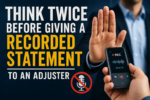
After a car accident, an insurance adjuster may quickly ask you to provide a recorded statement. While it may sound like a routine request, you should understand why they are asking before you agree.
In many cases, the adjuster has already reviewed the police report and has likely spoken with their insured about how the accident occurred. The recorded statement is often used to look for inconsistencies or statements that can reduce the value of your claim by shifting some of the blame to you.
For example, imagine you tell the adjuster that you were driving 50 mph in a 45 mph zone. Even if your speed had nothing to do with causing the crash, the insurance company may argue that you were partially at fault and use that statement to reduce the amount they pay under comparative negligence principles.
That does not mean you should refuse to cooperate. You can provide the basic facts of the accident without agreeing to a recorded interview. There is generally no legal requirement that your statement be recorded simply because the insurance company requests it.
Before giving any statement to an insurance company, especially the other driver’s insurer, understand your rights and consider whether a recorded statement is truly in your best interest.
The bottom line: You can provide a statement, but you do not have to let it be recorded simply because the adjuster asks.
Disclaimer
This post is provided for informational and educational purposes only and does not constitute legal advice. Each claim involves unique facts and contractual provisions that may alter the outcome. Readers should consult qualified legal counsel regarding specific matters before relying on this information.